Flatwork built for White County's clay and Arkansas rain — Searcy, Bald Knob, Beebe, and the towns between.
Call (555) 555-5555Or call — we answer. No obligation, honest advice.
Concrete work in Searcy is a fight with the ground, and the ground usually gets the first punch. White County clay swells when it's wet and shrinks when it's dry, and this part of Arkansas hands it around fifty inches of rain a year to work with, most of it arriving in spring sheets. Pour a driveway straight onto that clay with no base and no drainage plan, and the soil will fold it like paper — not this year, but on a schedule you can almost set a calendar by.
Searcy Concrete Pros builds for the ground that's actually here. That means compacted stone base under everything, reinforcement where the load calls for it, control joints that tell the concrete where it's allowed to crack, and grades that move water away from the slab instead of under it. New driveways, patios, sidewalks, garage slabs, and honest repair work when an older pour starts losing its argument with the clay.
Free written estimates for the whole county. Call (555) 555-5555, describe the project or the problem, and get a real number and a real timeline.
The neighborhoods around downtown and Harding carry housing from the 1940s through the '60s — original driveways past their design life, walks heaved by seventy years of clay cycles, and plenty of rental property where a failed slab is a liability question as much as a cosmetic one.
South and west of town it flips: subdivisions built quickly after 2000, now hitting the fifteen-to-twenty-five-year mark where first-generation flatwork starts to fail — especially on fill lots where the base prep was the corner that got cut. Both sides of town keep a concrete crew honest, in different ways.
Three services cover most of what White County ground does to concrete, and what new projects need to survive it. Each links to its own page.
New driveways and full replacements with compacted base, correct thickness, and joints planned for the clay underneath — not against it.
Patios, sidewalks, garage and shed slabs, and steps — poured with the drainage thought through before the truck arrives.
Honest triage for cracked, settled, and flaking concrete: what can be repaired, what should be replaced, and what can simply be watched.
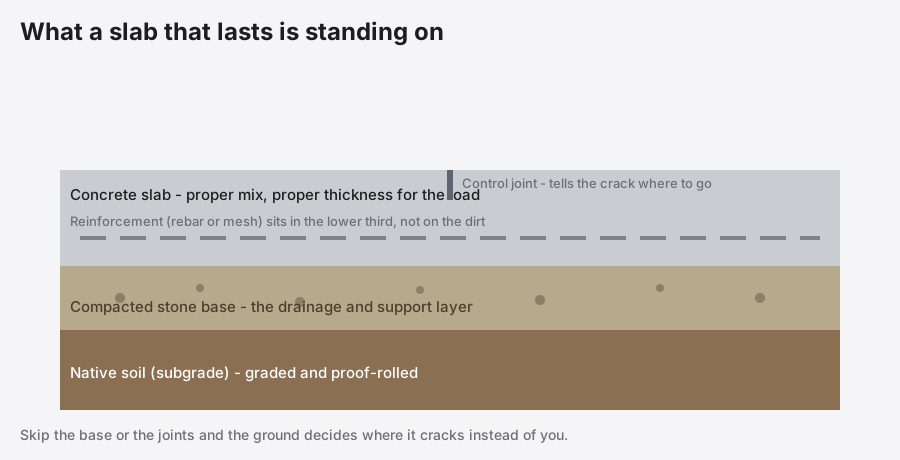
Every slab is a sandwich, and the bread matters more than the filling. Under good concrete sits a compacted stone base doing two jobs at once: spreading loads evenly and giving water somewhere to go besides directly beneath your driveway. Under the base, the native soil has been graded and compacted so the whole system starts level and stays that way.
In White County the base layer isn't optional trim — it's the part that referees between your concrete and the clay. Reinforcement rides in the lower third of the pour where it actually resists cracking, and control joints get sawed or tooled at planned intervals so that when the concrete moves — and in this climate it will — the crack happens in a straight line inside a joint instead of wandering across the middle of your driveway.
When you compare bids, ask every contractor what's under the concrete. The answer separates a pour that lasts thirty years from one that lasts eight.
Fifty inches of rain a year means every slab in this county is in a permanent negotiation with water. The failures we see follow the same script: water pools against a slab edge or runs under it, the clay below swells, the slab lifts or settles unevenly, a crack opens, more water gets in, and winter freeze-thaw finishes the job the drainage problem started.
That's why grade comes before concrete on every project here. Driveways get pitched so water leaves them; patios slope away from the house, never toward it; downspout discharge gets accounted for before forms are set. A quarter inch per foot of fall is invisible to the eye and priceless to the slab.
It's also why the cheapest bid is often the most expensive concrete in town. A thin pour on bare clay with no joints can look identical to a proper job on the day the forms come off. The difference shows up in year three, and by then the money's spent twice.
One habit worth adopting with any contractor in any trade, this one included: verify before you hire. Arkansas licenses contractors through the state Contractors Licensing Board, and any legitimate outfit can have its insurer send you a certificate of insurance directly. Ask for the license number, look it up, and get the scope in writing. Five minutes of checking beats every promise made across a tailgate.
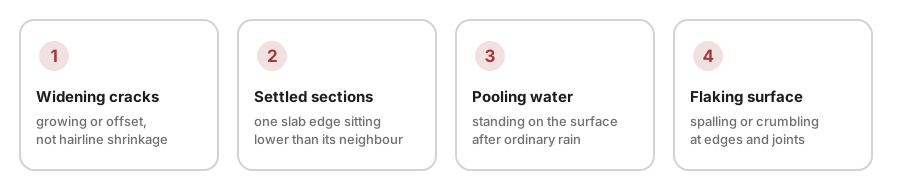
Widening cracks, settled sections, pooling water, and flaking surfaces — each one is the clay and the rain filing a progress report. Early attention is repair money; late attention is replacement money.
The same order of operations on a downtown replacement or a new pour out toward Rose Bud.
Someone looks at the actual site — the soil, the slopes, where water goes — before any number exists. The estimate reflects your lot, not a price sheet.
Thickness, base depth, reinforcement, joint plan, and finish — specified on paper before the pour, so you can compare bids on substance.
Concrete has rules about temperature and rain, and this climate tests all of them. Pours get scheduled for cure conditions, not calendar convenience.
A college town runs on rentals, and Searcy's stock around Harding carries decades of deferred flatwork — heaved walks, broken steps, driveways that predate the current owner by two owners. For landlords, that's a liability conversation: a tenant or visitor tripping on a two-inch slab offset is exactly the claim nobody wants to make.
The workflow fits remote owners: written estimates that travel by email, photos before and after, and scheduling coordinated with tenants so the work happens without you driving in from Little Rock. Trip hazards get triaged honestly — some offsets can be ground flush for a fraction of replacement cost, and when that's the right answer, it's the one you'll hear.
For owner-occupied homes the same honesty applies in the other direction: when a driveway is past saving, patching it annually is just replacement on an installment plan with worse interest.
Based in Searcy and covering White County — the neighborhoods around downtown and Harding, the newer subdivisions along the 67/167 corridor, and the towns up and down the highway from Bald Knob to Beebe.
On county-line ground and not sure? Call. If the truck can reach it, the answer is probably yes.
Seat of White County on the 67/167 corridor, an hour up the highway from Little Rock.
Not every crack is a crisis. Hairline shrinkage cracks are concrete being concrete; they get sealed and watched. A settled section with sound concrete can sometimes be lifted or the trip edge ground flush. Spalled surfaces on structurally sound slabs can take a resurfacing overlay. All of those cost a fraction of replacement, and when they're the right call, they're the recommendation.
Replacement earns its price when the slab has failed structurally — cracks that are widening and offsetting, sections rocking underfoot, or a base problem underneath that any repair would just sit on top of. Repairing concrete over a failed base is painting over rot; the honest fix goes down to the layer that actually failed.
Every repair estimate here says which category your concrete is in and why. Call (555) 555-5555 and get the straight read.
A driveway losing its fight with the clay, a patio project waiting on a straight answer, a rental walk that's become a liability, or a slab for the new shop — call (555) 555-5555 and describe it. Free written estimate, a real schedule, and concrete built for the ground it's standing on.
In this county, the ground always votes. Good concrete work just makes sure it doesn't get the only vote.
Tell us what you need and we'll get back to you with a real answer. If it's an active backup or standing water over the field, calling gets you a faster response.
Call: (555) 555-5555
Area: Searcy, AR and White County